Updated November 2026 · 9-minute read
Quick answer: A B2B portal is your own private ordering site where existing wholesale buyers log in to see their prices and reorder. A B2B marketplace is a shared platform, such as Faire or Amazon Business, where many sellers list products to reach new buyers. Choose a portal to keep your buyers, data and margins; choose a marketplace to find new buyers, and pay a commission on each order.
The B2B portal vs marketplace decision comes down to 1 question: do you need to serve buyers you already have, or find buyers you don’t? Buyers want to order online either way: 67% of B2B buyers prefer a rep-free buying experience, according to a Gartner survey published in March 2026, and e-commerce drives 34% of B2B revenue, according to McKinsey’s 2024 B2B Pulse survey of 3,942 decision-makers. This guide explains how each model works, compares them on 7 points, shows the real fees, and helps you pick, or combine, the right channel.
What Is a B2B Portal?
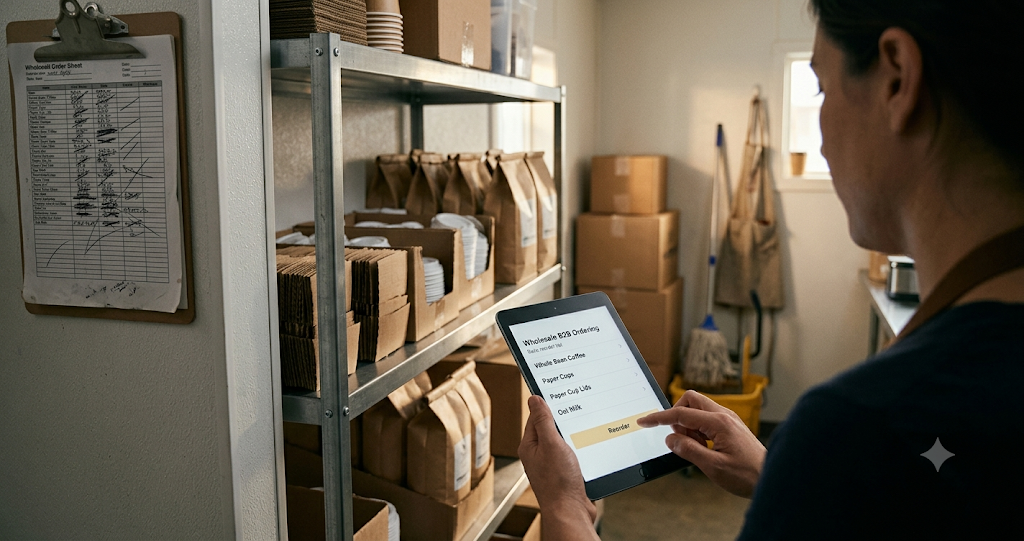
A B2B portal is a private, login-protected website where a manufacturer, brand or distributor sells to its own approved business customers at their own prices and terms. You own the site, the buyer accounts and every order record. A B2B ordering portal is the most common type: it focuses on catalogs, pricing and reorders.
How Does a B2B Ordering Portal Work?
A B2B ordering portal works in 4 steps:
- You approve the buyer and assign a price list, catalog and payment terms.
- The buyer logs in and sees only their products at their prices.
- The buyer places or repeats an order, and the portal applies minimums and case packs.
- The order flows to your ERP for fulfillment, invoicing and inventory updates.
What Features Does a B2B Portal Offer?
A B2B portal offers 7 core features:
- Customer-specific price lists, discounts and payment terms
- Assigned catalogs by customer or region
- Minimum order quantities, case packs and size runs
- Quick order by SKU and 1-click reorder from history
- Order tracking and invoice downloads
- Sales rep ordering on behalf of accounts
- ERP, inventory and accounting integration
What Is a B2B Marketplace?
A B2B marketplace is a shared online platform where many sellers list products and many business buyers shop, with the marketplace operator running search, checkout and payments. Examples include Faire for independent retail, Amazon Business for business purchasing, and Alibaba.com for global sourcing.
How Does a B2B Marketplace Work?
A B2B marketplace works in 4 steps:
- You create a seller account and list products under the marketplace’s rules.
- Buyers discover your products through the marketplace’s search and categories.
- The buyer checks out on the marketplace, which collects payment.
- The marketplace pays you after deducting its commission and fees; you ship the order.
What Features Does a B2B Marketplace Offer?
A B2B marketplace offers 5 core features:
- Access to an existing pool of buyers
- Search, categories and product discovery
- Built-in checkout and payment collection
- Buyer payment terms on some platforms: Faire, for example, offers retailers 60-day terms
- Bulk-buying tools on some platforms: Amazon Business offers quantity discounts from 2 units
B2B Portal vs Marketplace: What Are the Main Differences?
The main difference is ownership: you own a portal and its buyer relationships; a marketplace owns the platform and controls the buyer experience.
| Factor | B2B portal | B2B marketplace |
|---|---|---|
| Who owns the platform | You | The marketplace operator |
| Buyers | Your existing, approved accounts | New buyers browsing many sellers |
| Customer data | Yours: full order history | Shared or limited by the marketplace’s terms |
| Pricing | Customer-specific price lists and terms | Marketplace pricing rules; competitors beside you |
| Branding | Your brand throughout | Your listing inside the marketplace’s brand |
| ERP integration | Direct, two-way | Through connectors or manual export |
| Fees | Subscription; no commission | Commission or referral fee per order |
Business Ownership and Control
A portal runs on your rules: who can buy, what they see and how orders are approved. A marketplace runs on the operator’s rules, which it can change at any time.
Customer Relationships and Data Ownership
A portal stores every buyer’s order history, reorder rhythm and contact details in your system. On a marketplace, the operator owns the checkout, so access to buyer data depends on its terms. Your reorder data is what tells you which accounts to call and which products to make more of.
Product Catalog and Pricing Management
A portal shows each buyer their own catalog and contract prices. A marketplace listing shows the same price to every buyer on the platform, with competing sellers alongside.
Order Processing and Fulfillment
Portal orders go straight to your ERP and warehouse with your PO numbers and ship dates. Marketplace orders arrive through the marketplace’s order system and need to be synced or re-entered.
Branding and Customization
A portal carries your logo, product presentation and ordering flow. A marketplace gives you a listing or storefront inside its own design.
ERP and Third-Party Integrations
A portal connects 2 ways with your ERP, such as NetSuite or QuickBooks, for prices, stock, orders and invoices. A marketplace connects through its API or a connector app, and the depth varies by marketplace.
Costs, Fees and Revenue Models
A portal costs a subscription and setup fee, with no commission on orders. A marketplace charges on every sale:
| Marketplace | Fees to sellers |
|---|---|
| Faire | 15% commission on orders from customers found on Faire, plus a $10 fee on a new customer’s opening order; 0% on orders through your own Faire Direct link; payment processing 1.9%–3.5% + $0.30 depending on payout speed |
| Amazon selling plan | $39.99/month Professional plan, plus referral fees by category: 8% (consumer electronics) to 15% (office products, home and kitchen) |
Sources: faire.com/brands and sell.amazon.com/pricing, checked November 2026.
Example: a brand doing $200,000 a year in wholesale orders from buyers found on Faire pays $30,000 in 15% commission before processing fees. The same $200,000 through your own portal carries no commission.
What Are the Advantages and Disadvantages of Each Model?
A portal trades reach for control; a marketplace trades control for reach.
Advantages and Disadvantages of a B2B Portal
| Advantages | Disadvantages |
|---|---|
| No commission on orders | Doesn’t bring new buyers on its own |
| Customer-specific prices, catalogs and terms | Subscription and setup cost before the first order |
| Full buyer and order data | You onboard buyers yourself |
| Direct ERP and inventory sync | You set your own payment terms and carry the credit risk |
| Your brand on every screen |
Advantages and Disadvantages of a B2B Marketplace
| Advantages | Disadvantages |
|---|---|
| Immediate access to new buyers | Commission on every order (Faire: 15%; Amazon: category referral fees, e.g. 8–15%) |
| Fast to start: list and sell | Competitors listed beside you |
| Checkout and payments handled | Limited control of pricing, branding and buyer data |
| Buyer payment terms offered by some platforms | Rules and fees set by the operator |
Which Is Better for Your Business: A B2B Portal or Marketplace?
A portal is better when most of your revenue comes from repeat accounts; a marketplace is better when you still need to find buyers.
When Should Manufacturers Choose a B2B Portal?
Manufacturers choose a portal when they sell through dealers or retailers on negotiated price tiers. Each dealer sees its own price list, territory catalog and minimums, and orders go straight into production planning through the ERP.
When Should Wholesalers and Distributors Choose a B2B Portal?
Wholesalers and distributors choose a portal when they handle large catalogs and frequent reorders. Quick-order pads, saved lists and live stock let a buyer, for example, reorder 40 lines in minutes, at their contract price, instead of emailing a spreadsheet.
When Should Businesses Choose a B2B Marketplace?
A marketplace fits 3 situations:
- A new brand with few wholesale accounts that needs discovery
- A test of a new market or product line before investing in your own channel
- Products that buyers already search for by category on a specific marketplace, such as office supplies on Amazon Business
Can You Use a B2B Portal and Marketplace Together?
Yes. Use a marketplace to find buyers and a portal to keep them. Run the first order through the marketplace, then invite repeat buyers to your portal, where they get their own prices and you pay no commission. Read each marketplace’s seller terms first: marketplaces set rules on contacting their buyers outside the platform. Faire supports a version of this with Faire Direct: orders from retailers you bring through your own Faire Direct link carry 0% commission. Keep 1 source of truth for stock and prices, your ERP, so both channels show the same inventory.
How Do You Choose the Right B2B Ecommerce Solution?
Choose in 4 checks.
Evaluate Your Sales Model
Count where revenue comes from today. Mostly repeat accounts points to a portal. Mostly first-time buyers points to a marketplace.
Check Your Pricing and Ordering Requirements
List your price tiers, minimums, case packs and payment terms. Several price lists or negotiated terms per customer need a portal.
Review ERP and Inventory Integration
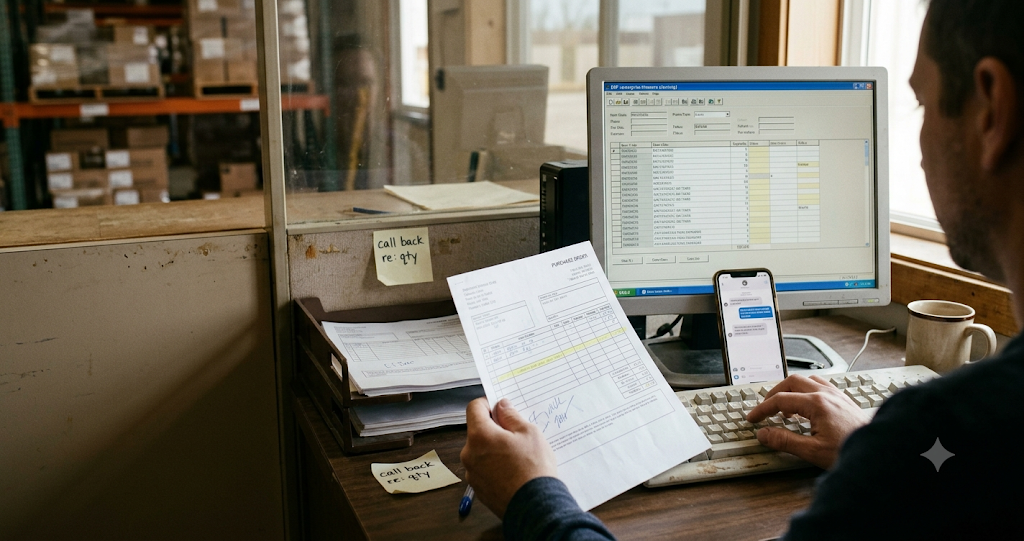
Confirm the channel can sync orders, stock and invoices with your ERP 2 ways. Manual re-entry of orders adds errors and staff hours.
Calculate Total Operating Costs
Compare 12 months of each channel: portal subscription plus setup vs. marketplace commission plus processing fees on your expected order volume. At $200,000 of marketplace-sourced orders, Faire’s 15% commission alone is $30,000 a year.
Frequently Asked Questions
Is a B2B portal the same as a B2B marketplace?
No. A portal is your private site for your own buyers; a marketplace is a shared platform for many sellers and buyers.
Is a B2B marketplace better than a wholesale portal?
A marketplace is better for finding new buyers; a wholesale portal is better for serving and keeping them. Wholesalers with repeat accounts need a portal for those reorders.
Who owns customer data on a B2B marketplace?
The marketplace operator controls the checkout and the customer data, and its terms decide what sellers can access. On a portal, you own all of it.
Can a B2B portal support multiple suppliers?
A standard portal serves 1 seller’s catalog. Some platforms support multi-brand or multi-vendor catalogs, which turns the portal into a private marketplace you control.
Does a B2B marketplace charge sellers commission?
Yes, the major ones do. Faire charges 15% on orders from customers found on Faire; Amazon charges $39.99 a month plus a referral fee that varies by category, for example 8% for consumer electronics and 15% for office products.
Can a business sell through its own portal and marketplaces?
Yes. Use marketplaces to find buyers and your portal for repeat orders, with your ERP as the single source of stock and prices.
Choose the Channel That Fits Your Buyers
A marketplace rents you reach; a portal gives you ownership of your buyers, prices and data. Wholesale businesses keep more margin and data when repeat buyers order through their own wholesale site and marketplaces handle only discovery.
MyAtOnce gives each wholesale buyer a private login with their own prices, 24/7 reorders and ERP sync. Still weighing an open online store instead? See how a login-only portal compares with a public store. Book a demo or call 877-745-8750.
Sources
- Faire, Brands pricing page (faire.com/brands) and Payment terms support article, checked November 2026
- Amazon, Selling plans and fees (sell.amazon.com/pricing), checked November 2026
- Amazon Business, Bulk buying (business.amazon.com), checked November 2026
- Gartner, “Gartner Sales Survey Finds 67% of B2B Buyers Prefer a Rep-Free Experience,” March 9, 2026
- McKinsey & Company, B2B Pulse 2024